
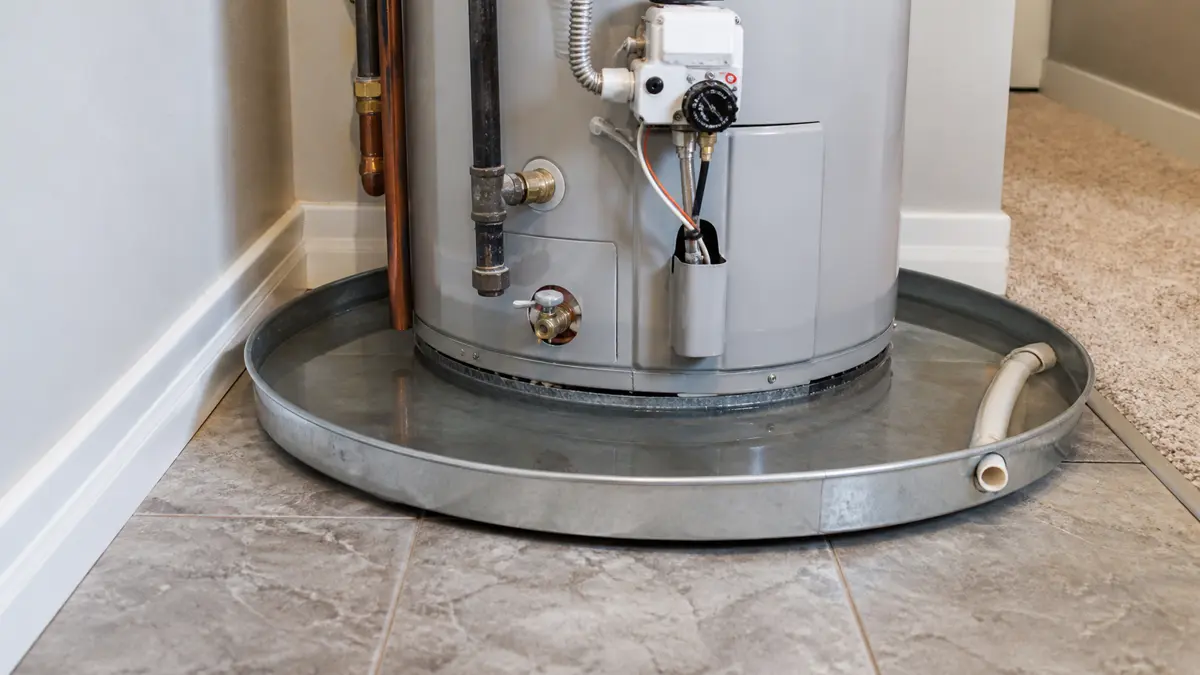
Water in a water heater drain pan deserves attention even when the puddle looks small. The pan is a warning point, not a normal storage area, and the source may be above, beside, or separate from the tank. Ogden homeowners can take a few safe steps to limit damage and give a plumber better information.
Quick answer: Do not ignore water in the pan. Avoid touching electrical controls or opening the heater, stop nearby water use if the leak is active, and look only from a safe distance for the highest visible wet point. Then arrange a professional inspection to identify the source.
Treat the pan as an alert
A drain pan sits below a water heater to catch incidental leakage and direct it toward a drain when the installation includes a drain connection. It does not repair a leak, and it may not contain a large or fast release.
First, check the floor around the pan. Is it dry, damp, or actively spreading? Then look upward without reaching behind the heater. Water may be visible at a pipe connection, on the tank jacket, or along another nearby surface.
Do not assume the tank itself is leaking. Condensation, a nearby pipe, a valve, or water from another source can reach the pan. Whirlpool’s water-heater support guidance notes that a small puddle near a heater may sometimes be condensation. Only an inspection can confirm what is happening in a particular home.
Keep water and energy hazards separate
Water heaters involve hot water and either electricity or fuel. A wet area can become more dangerous when it reaches wiring, controls, a receptacle, or another powered appliance.
Follow these boundaries:
- Do not open an access panel.
- Do not touch wet controls, cords, plugs, or wiring.
- Do not relight a pilot or change a temperature setting.
- Do not operate a valve that is corroded, stuck, or unfamiliar.
- Do not stand in water to reach the heater.
If you smell gas, leave the area and follow the gas utility’s emergency instructions. Do not operate switches or try to locate the leak yourself.
If water is actively spreading toward electrical equipment, keep people away. Call the appropriate emergency resource before routine plumbing work. Mike Bachman Plumbing’s emergency plumbing page explains how to request help for an active plumbing problem.
Record where the water appears
The most helpful observation is the highest visible wet point. Water travels down surfaces, so a puddle at the bottom may have started well above it.
From a safe location, note:
- Whether the pan is damp, partly filled, or overflowing
- Whether water is still entering the pan
- Whether the tank jacket or nearby piping is wet
- Whether hot-water use changes the rate
- Whether the heater recently made a new sound
- Whether another appliance or pipe is close enough to be the source
A photo of the entire heater area can preserve the original condition. A second photo can show the water line in the pan. Never lean over a hot, wet, or unstable surface just to get a close-up.
Why waiting can make diagnosis harder
A small amount of water can dry before a technician arrives, but that does not prove the issue ended. Intermittent leaks may appear only when the heater cycles or when household demand changes. Moisture can also move into flooring or a wall before it becomes obvious.
Marking the water level on the outside of the pan is not necessary. A time-stamped photo and a short note are safer and usually more useful. Write down when you first noticed the water and whether the level changed without deliberately running more hot water.
For professional assessment, use Mike Bachman Plumbing’s water heater repair service. The technician can inspect the heater, its connections, and nearby plumbing rather than treating the pan as proof of one specific failure.
What not to pour into the pan
Do not add sealants, leak-stop products, cleaners, or absorbent material around the heater. These can hide the source, block a drain opening, or create new contact with hot components.
Do not attempt to patch the tank jacket. The outer surface is not a reliable map of the internal condition, and a surface patch can delay the inspection that the system needs.
If the pan has a drain line, do not disconnect it to see whether it is blocked. A plumber can check where it leads and whether it is working as intended.
Prepare the heater area for service
Keep the path to the heater clear without moving the heater, piping, vent, or electrical connections. Remove only ordinary stored items that can be reached from dry flooring. Make sure the technician knows where the home’s main water shutoff is, but do not test an unfamiliar valve during an active leak.
Have the heater model information available if it can be read from a safe position. The first photo you took, the time water appeared, and any change in hot-water use will help preserve details that may no longer be visible when service begins.
Frequently asked questions
Is a little water in the drain pan normal?
No amount should be treated as routine. Condensation can occur under some conditions, but a leak from the heater or nearby plumbing is also possible. Have the source confirmed.
Can I keep using hot water?
If the source is unknown, continued use may change or worsen the leak. Avoid unnecessary hot-water use until the condition is evaluated, especially if water is actively entering the pan.
Does water in the pan mean the tank must be replaced?
Not by itself. The water could come from several locations. A plumber must identify the source and inspect the equipment before recommending the next step.
What if the floor is wet but the pan is dry?
That pattern may point to a source outside the pan or water that bypassed it. Leak detection and pipe repair may be relevant when the source is not obvious.
Arrange an inspection while the evidence is fresh
Water in a water heater drain pan is a reason to pause, document, and get qualified help. Keep clear of electrical and fuel controls, avoid disassembly, and record the highest visible wet point.
Contact Mike Bachman Plumbing in Ogden to inspect the heater and surrounding plumbing. A direct assessment can identify the source and establish the appropriate repair path without relying on the puddle alone.