
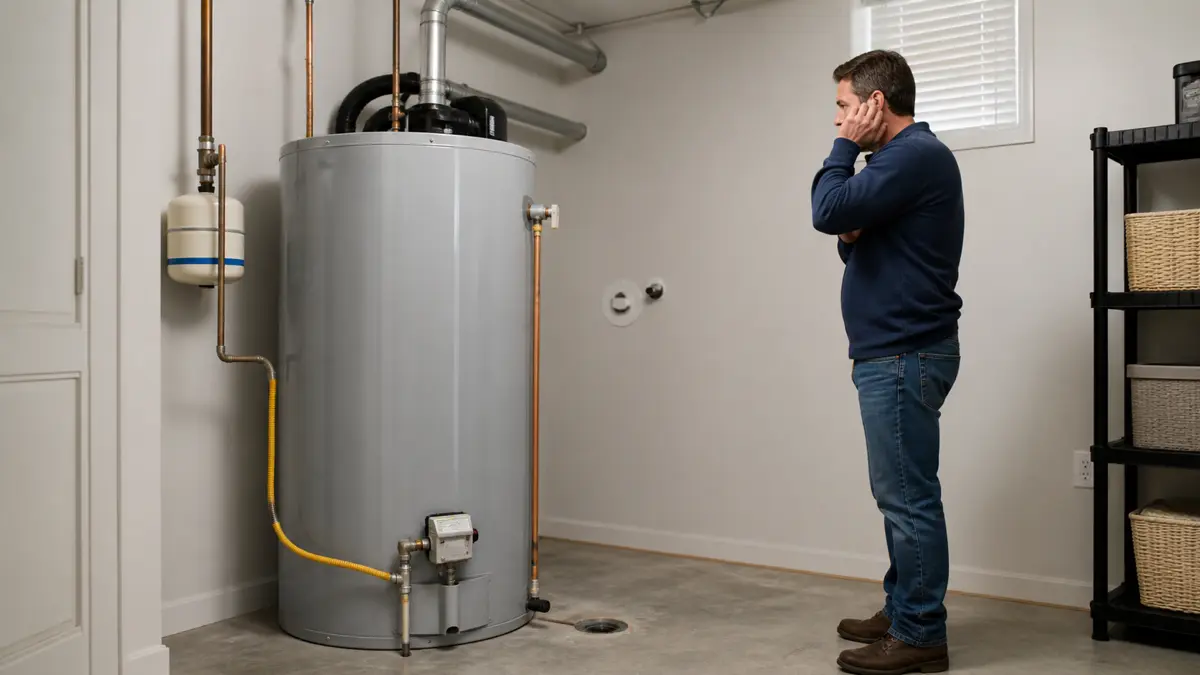
A water heater popping noise may start out faint, then get hard to ignore as the unit heats. The sound may seem like a pop, rumble, crackle, or gurgle. Since several faults can sound alike, record the cycle and arrange an inspection. Do not open the unit.
Quick answer: Note when the noise begins, how long it lasts, and whether hot-water performance changed. Do not raise the temperature, open access panels, drain the tank, or work on fuel connections as a test. New, persistent, or worsening noise should be evaluated by a plumber familiar with the specific heater.
Describe the sound and its timing
“Noisy” can mean many things. A clear description helps separate a sound from the tank, piping, vent, or another nearby appliance.
Record:
- Popping, low rumbling, ticking, hissing, or vibration
- Whether the sound begins during hot-water use or afterward
- Whether it occurs at every heating cycle
- Whether the tank or nearby pipe visibly moves
- Whether hot water now takes longer or runs out sooner
- Whether any water is present below the heater
A short recording from a safe distance can help. Do not place a phone behind the heater, above a draft hood, or near a hot vent to capture louder audio.
Why mineral buildup is one possible factor
Water has dissolved minerals that can build up in some tanks over time. An A. O. Smith service handbook lists scale, lime, or mineral buildup as a possible cause of crackling, gurgling, popping, and rumbling sounds.
“Possible” is the key word. A sound alone cannot show how much material is present or prove it is the source. Heater design, age, maintenance history, installation, and the exact location of the sound all matter.
Northern Utah homeowners are familiar with mineral scale, but local water conditions should not be used to make a remote diagnosis. Mike Bachman Plumbing can inspect the unit through its water heater repair service.
Sounds that may come from nearby piping
Water lines expand and contract as temperature changes. Pipes can also transmit vibration from a valve or appliance, making a sound seem as though it comes from the heater.
Listen from outside the equipment area and note whether the sound is strongest at the tank, along a wall, or near a pipe connection. Do not touch a hot pipe or remove insulation to investigate.
If the noise happens only when a faucet opens or closes, include that detail. If several fixtures show a pressure or flow change at the same time, mention the wider pattern to the plumber.
Do not turn maintenance into a safety risk
Online advice may suggest draining or flushing a tank. That work can involve scalding water and a drain valve that may not seal again. Each unit also has its own steps to shut down and restart. A worn valve can turn this task into an active leak.
Do not:
- Open electrical access panels
- Adjust gas controls
- Block or move venting
- Operate a corroded drain valve
- Raise the temperature to test performance
- Strike or shake the tank to reproduce the sound
If you smell gas, leave the area and follow the gas utility’s emergency direction. If water reaches electrical equipment, keep away from the wet area and contact the appropriate emergency resource.
Check for changes beyond the noise
The noise matters more when it appears with another symptom. Look from a safe distance for water in the drain pan, moisture at visible connections, discoloration on the tank jacket, or an error display.
Also note changes in daily use:
- Water temperature fluctuates
- Hot water runs out sooner
- Recovery seems different from normal
- A breaker trips or the unit stops operating
- The sound becomes sharper or more frequent
Do not reset a repeatedly tripping breaker. Electrical protection that opens again signals a condition that needs qualified evaluation.
If the home uses a tankless unit, avoid applying tank-style guidance. Tankless equipment has different components and maintenance procedures. Use the company’s tankless water heater service page when discussing that system.
Give the technician the equipment details
Water-heater guidance depends on the model. If you can read the rating label from a dry, clear spot, take a photo of the model and serial data. Do not lean across hot pipes or remove a cover to find it.
Write down the fuel or energy type, approximate installation date if known, and any prior maintenance documented for the unit. Report facts from home records rather than guessing at the heater’s age.
A simple sound log can also help:
- Time the noise began
- Fixture used shortly before it began
- Approximate duration
- Words that best describe the sound
- Any visible water or error message
This record can separate an intermittent cycle from a constant mechanical or piping noise. It also gives the plumber a useful starting point if the heater is quiet during the visit.
Frequently asked questions
Is a popping water heater dangerous?
The sound alone does not establish the level of risk. Treat gas odor, visible leakage, electrical problems, vent damage, or scalding temperature as separate safety concerns that need immediate attention.
Will the noise go away if I use less hot water?
It may occur less often if the heater cycles less, but that does not identify or correct the cause. Record the relationship and schedule an inspection.
Can I drain the tank myself?
Only follow the manufacturer’s procedure if you fully understand the equipment and can manage hot water safely. When the heater is already noisy, leaking, or unfamiliar, professional service is the safer choice.
Does this mean I need a new water heater?
Not necessarily. A technician should inspect the actual unit before recommending repair or replacement.
Have a new or worsening sound inspected
A water heater popping noise is useful evidence, not a complete diagnosis. Record its character, timing, and any change in hot-water performance. Leave panels, valves, fuel controls, and electrical work untouched.
If the noise persists, contact Mike Bachman Plumbing in Ogden for an inspection. The team can identify where the sound originates and recommend the next step for the specific system.