


A toilet tank filling slowly can delay the next flush and add a long hiss to every bathroom visit. The cause may be inside the tank, at the toilet’s water supply, or part of a broader flow change. A few careful observations can help an Ogden plumber narrow the problem without unnecessary disassembly.
Quick answer: Time one ordinary refill, listen for changes, and compare the toilet with nearby faucets. With the tank lid removed, you may watch the water level from above without touching moving parts. A slow refill that persists, stops short, or comes with leakage should be inspected.
Confirm whether the tank or bowl is slow
The tank and bowl refill through related but different paths. After a flush, the tank should rise toward its set water level while a small stream typically replenishes the bowl. Tell the plumber which part appears delayed.
Use one normal flush and observe:
- How long the tank continues making fill noise
- Whether water reaches the marked level inside the tank
- Whether the bowl returns to its usual level
- Whether the fill starts immediately or pauses first
- Whether the sound is steady, faint, or pulsing
Do not flush repeatedly to produce a better measurement. One ordinary cycle is enough. If the tank nearly overflows or water runs continuously into the overflow tube, stop testing.
Look for a fixture-level pattern
Run a nearby faucet briefly after the toilet finishes. If normal flow is present elsewhere, the issue may be limited to the toilet or its supply. If several fixtures seem weak, report the wider change rather than treating the toilet as the only symptom.
Inside a common tank-style toilet, the fill valve controls the refill after a flush. A float or related mechanism tells the valve when the tank has reached its intended level. Designs vary, so online instructions for one model may not fit another.
A Kohler troubleshooting guide lists a fully open supply valve and a clear valve inlet, valve head, and supply line among the checks for a tank that takes excessive time to fill. That manufacturer guidance applies to the listed models. It is not proof of the cause in every toilet.
Safe checks that preserve the symptom
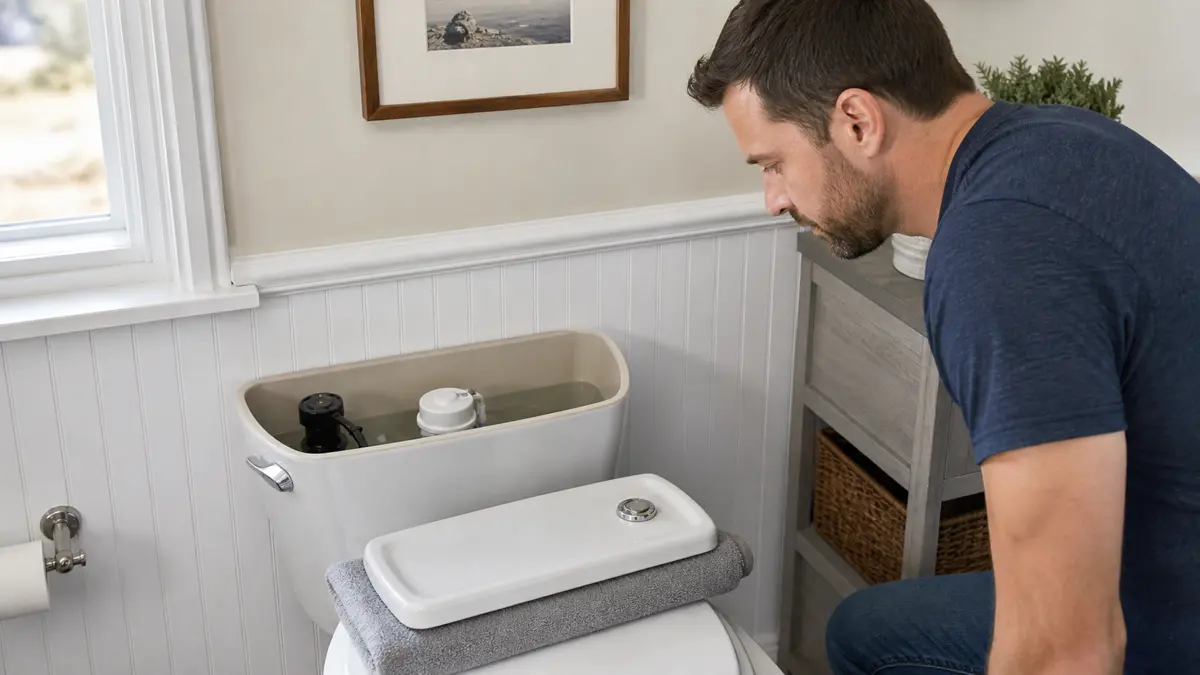
You can remove the porcelain tank lid carefully if it lifts freely and you have a stable place to set it. The lid is heavy and can crack, so do not balance it on the seat or floor edge.
Watch from above while keeping hands out of the tank. Note whether:
- The fill valve releases a strong or weak stream
- Water flows into the overflow tube continuously
- The float moves freely during the cycle
- The tank stops below or above its normal line
- Water appears outside the tank or near the floor
Avoid forcing the wall shutoff valve. Older valves may begin leaking when disturbed. Do not loosen the supply connection or take apart the fill valve unless you have the correct model instructions and are prepared to control the water safely.
For a persistent problem, Mike Bachman Plumbing provides toilet repair and installation for Ogden-area homes.
Slow refill and running are not the same symptom
A slow-filling toilet eventually reaches its normal level but takes longer than expected. A running toilet may continue sending water into the tank or bowl after it should stop. The sounds can seem similar from another room.
Look for water moving into the overflow tube after the tank should be full. Also watch for a slight ripple in the bowl. The EPA advises further investigation or help from a plumber when a toilet runs constantly or water continues into the overflow.
If the tank slowly loses water and refills by itself, report that cycle. It may indicate a sealing issue rather than a slow incoming flow. Do not add tablets or cleaners to the tank as a test because they can affect components and obscure the original condition.
When to stop using the toilet
A slow refill alone may allow normal scheduling. Stop using the toilet when it cannot complete a reliable flush, when the bowl rises toward the rim, or when water reaches the floor.
Arrange prompt help for:
- A supply connection that drips or sprays
- A cracked tank or bowl
- Water collecting around the toilet base
- A bowl that rises instead of draining
- Multiple fixtures with sudden weak flow
- Water near electrical cords or a powered fixture
If water is present outside the toilet and the source is uncertain, leak detection and pipe repair may be the appropriate service path.
Frequently asked questions
Before the appointment, keep the bathroom floor clear and tell household members not to keep testing the toilet. If the fixture has a model number inside the tank or on the bowl, photograph it only when it is easy to reach. Model information helps identify the correct internal design without disturbing the parts.
How long should a toilet take to refill?
There is no useful universal time because tank size, valve design, and supply conditions vary. Compare the current cycle with the toilet’s established normal behavior and report the change.
Can sediment affect a fill valve?
Manufacturer guidance recognizes that debris can affect fill-valve operation. The correct cleaning or replacement procedure depends on the toilet and valve model.
Should I replace the fill valve myself?
Only if you can positively identify the model, shut off water safely, and follow its instructions. If a valve is stuck, a connection is corroded, or leakage is present, call a plumber.
What if every fixture seems slower?
Tell the plumber that the change is not limited to the toilet. A whole-home flow issue requires a broader assessment.
Get a slow refill checked before it becomes a no-fill
A toilet tank filling slowly is best evaluated by comparing the tank, bowl, sound, and nearby fixtures. Preserve the pattern, avoid forcing old valves, and take a short video if it can be done safely.
If the slow refill continues, contact Mike Bachman Plumbing in Ogden to schedule service. The team can inspect the toilet and its supply, identify the cause, and explain the appropriate next step.