
If a toilet keeps running after a flush, water may continue moving long after the tank should be full. Sometimes the sound is constant. Other times the toilet becomes quiet, then refills by itself minutes later. Distinguishing those patterns helps an Ogden plumber find the right part of the tank to inspect.
Quick answer: Watch one normal flush with the tank lid removed. Note whether water enters the overflow tube, whether the sealing component closes, and whether the tank reaches its normal level. Do not force the wall valve or take the fill valve apart if leakage, corrosion, or an unfamiliar design is present.
Continuous running versus occasional refilling
A continuously running toilet usually makes a steady fill sound. Water may be visible moving into the overflow tube or bowl. An intermittent toilet may stop, then switch on briefly because the tank level dropped.
Those patterns can point to different tank behaviors:
- Water never shuts off after a flush
- Water shuts off but starts again later
- The handle sticks and prevents a full close
- The tank fills above its intended water line
- The bowl surface shows a faint, constant ripple
Do not hold the handle down or flush repeatedly. One cycle provides enough information and avoids sending unnecessary water through the fixture.
The EPA’s WaterSense home-maintenance guidance recommends further investigation or a local plumber when a toilet runs constantly or water continues into the overflow tube.
What the visible tank parts do
Most tank-style toilets have a fill valve, a float or level control, an overflow tube, and a flapper or canister that seals the flush opening. The shapes and adjustment methods vary by model.
After the handle is pressed, the sealing component opens and tank water enters the bowl. It should then close so the tank can refill. The fill valve should stop when water reaches the intended level.
Kohler identifies several possible causes of constant leaking or running, including a binding trip lever, water entering the overflow, or debris in a fill valve. That model-based guidance shows why observing the exact behavior matters. It does not establish the cause in every toilet.
A safe observation sequence
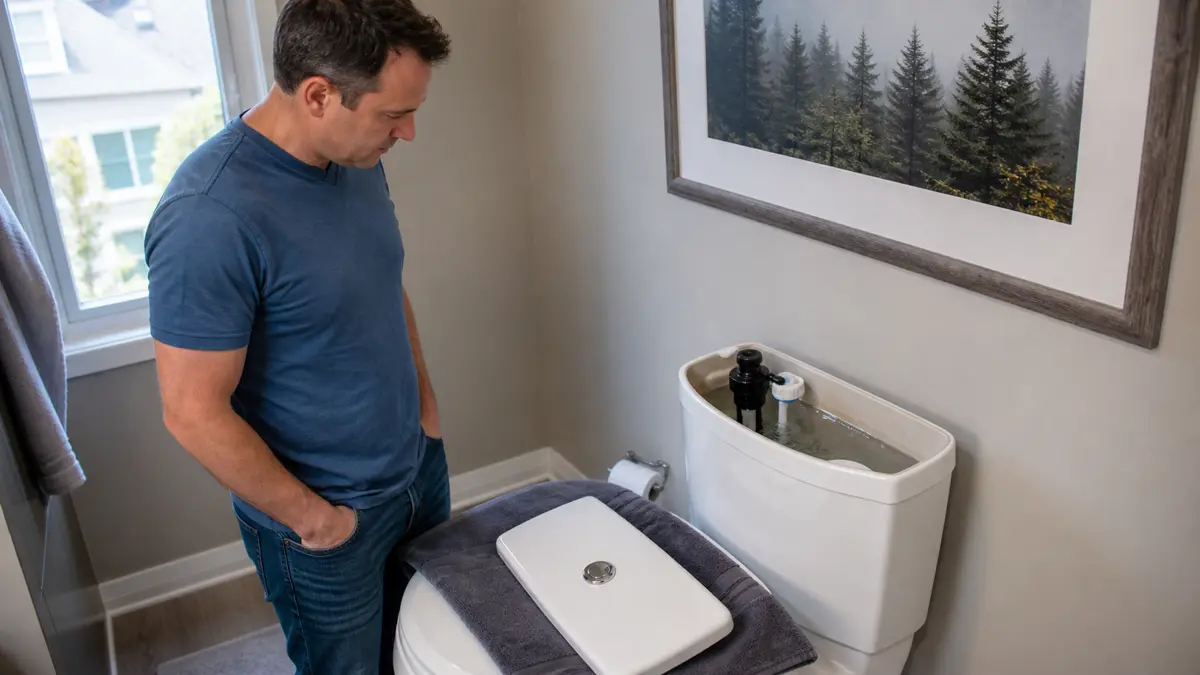
If the tank lid lifts freely, remove it with both hands and place it on a towel on a stable surface. Keep fingers away from moving parts during the flush.
Watch for:
- A chain or lever that does not return
- A flapper or canister that stays partly open
- Water flowing over the top of the overflow tube
- A float that remains stuck below the water line
- Water outside the tank or around the toilet base
You can also use the EPA’s simple dye test for a silent leak. Place a few drops of food coloring in the tank, wait 10 minutes without flushing, and check whether color appears in the bowl. Flush afterward to prevent staining. Skip the test if the toilet is already overflowing, leaking externally, or unable to flush normally.
For a persistent running pattern, schedule toilet repair and installation rather than buying parts based only on a sound.
Be cautious with the shutoff valve
Turning off the toilet’s water supply can stop continuous flow, but older shutoff valves may be stiff, corroded, or unreliable. Do not force a valve that will not move with gentle hand pressure. Do not use a wrench for extra leverage.
If the valve begins leaking, place a container or towel only if you can do so without reaching near electricity. Then call for help. A small valve leak can spread into flooring or a wall.
If the toilet is stable and the valve operates normally, shutting off the water between uses may limit waste until service. Make sure everyone in the home knows the toilet is out of service.
Save the details that identify the toilet
Tank parts are not universal. If the model number is visible without moving the fixture, take a clear photo of it and the tank interior. Also record whether the toilet has a flapper, canister, or pressure-assisted unit inside the tank. Do not open a sealed pressure vessel or remove attached components.
Keep the floor around the toilet clear before service. If the fixture is shut off, place a note on the handle so another person does not try to use it before the repair.
When a running toilet becomes urgent
Most running toilets can be scheduled for service, but water outside the fixture changes the priority. Stop using the toilet if the bowl rises toward the rim, the tank is cracked, or water reaches the floor.
Seek prompt help for:
- A supply line or valve that sprays or drips
- A tank that fills above the overflow tube
- Water around the toilet base
- A bowl that drains slowly while the tank keeps running
- Moisture near an outlet or powered device
If the water source is unclear, Mike Bachman Plumbing’s leak detection and pipe repair service can help trace the condition.
Frequently asked questions
Will a running toilet stop on its own?
It may become quiet temporarily, but intermittent refilling can continue. Record how often it restarts and have the cause corrected.
Does a running sound always mean a bad flapper?
No. The flapper or canister is one possibility, but the fill valve, float, handle linkage, water level, and model-specific components also matter.
Can I use an in-tank cleaning tablet?
Do not use a cleaning product as a repair test. Some products can affect rubber or plastic parts, and they will not identify why the toilet runs.
What if more than one toilet starts running?
Report the timing and any whole-home water change. Two aging fixtures can have separate issues, but a shared change deserves a broader look.
Restore a normal refill cycle
When a toilet keeps running after a flush, the timing and water path are the best starting clues. Observe one cycle, use a dye test only when safe, and avoid forcing the shutoff valve.
If the running continues, contact Mike Bachman Plumbing in Ogden to schedule service. A plumber can identify the model, inspect the tank components, and correct the verified cause.