


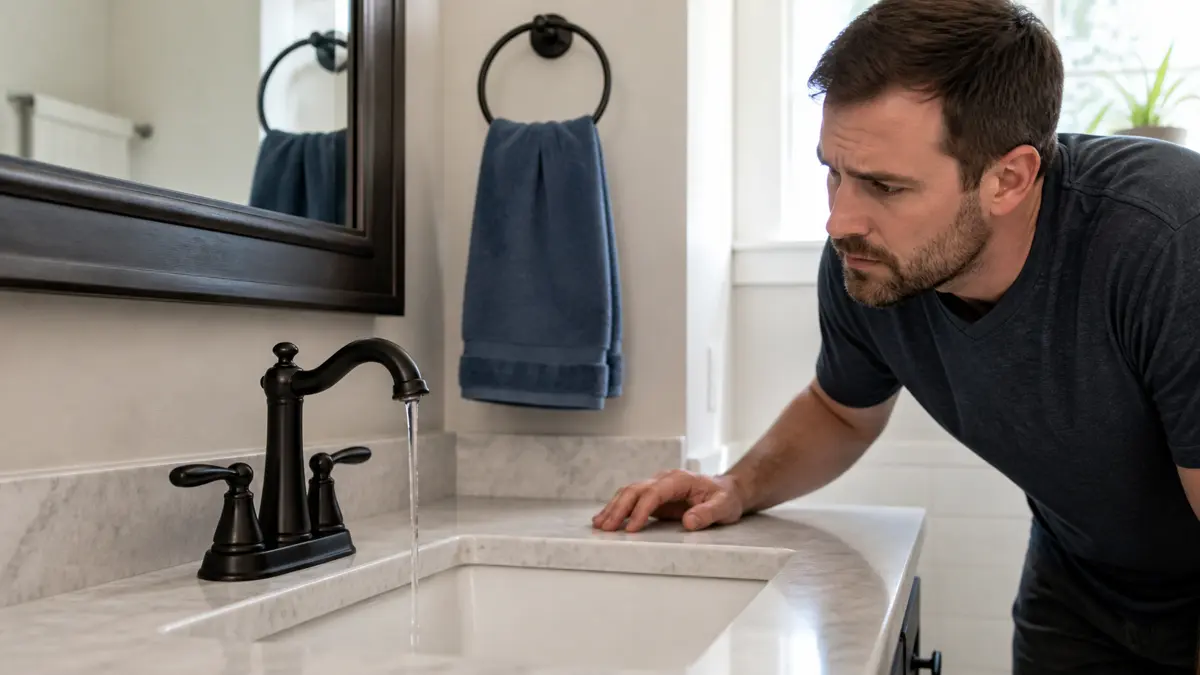
Low hot water pressure at one fixture can make a shower or sink hard to use. The pattern gives a plumber useful clues, especially when cold water still flows well at the same fixture. This guide explains what Ogden homeowners can check safely and when to arrange an inspection.
Quick answer: When only one fixture has weak hot-water flow, the issue is often closer to that fixture than to the whole plumbing system. Compare hot and cold flow, note whether nearby fixtures are affected, and stop if you find a leak or unsafe condition. A plumber can then isolate the restriction without guesswork.
First, define what “low pressure” means in your home
People often use “pressure” to describe any weak stream. A slow flow at one faucet, however, does not automatically mean the home’s incoming water pressure has changed. The useful question is where the symptom appears.
Make four simple comparisons without taking anything apart:
- Run cold water at the affected fixture, then hot water.
- Check another sink or shower nearby.
- Notice whether the flow starts normally and then fades.
- Record whether the change is constant or intermittent.
If cold flow is normal but hot flow is weak, tell the plumber exactly that. If both sides are weak, the fixture may still be involved, but the pattern is different. If several fixtures changed at once, the investigation may need to extend beyond a single faucet or shower.
The EPA’s WaterSense home-maintenance guidance recommends checking fixtures for leaks and paying attention to service pressure and hot-water systems. Those broad checks are useful, but they do not identify the cause in a specific Ogden home.
Why one-fixture problems are different
A home’s water supply branches to each fixture. That layout means a change at one sink can have a local cause while the rest of the house works well. A plumber may check the faucet or shower parts, the nearby supply line, or another local blockage.
Mineral deposits can affect small paths in plumbing fixtures. Wear, debris, a blocked part, or recent plumbing work may also change the flow. The symptom alone cannot prove any one cause.
This is why replacing random parts is a poor first move. A correct repair depends on the fixture model, the hot-and-cold comparison, and what a direct inspection finds. If you want a focused evaluation, Mike Bachman Plumbing’s leak detection and pipe repair service covers plumbing problems that require closer tracing.
Check whether hot water behavior changed too
Flow and temperature are separate observations. Tell the plumber if the water also takes longer to become hot, shifts between hot and cool, or runs out sooner than it used to. Those details may change which part of the system needs attention.
Do not raise the water-heater temperature or open a heater panel to test a theory. Hot water can cause scalding, and electric or gas equipment adds hazards that are not present at an ordinary faucet.
Instead, record:
- Which fixture is affected
- Whether hot and cold flow differ
- Whether the water reaches its usual temperature
- When the symptom began
- Whether any plumbing work happened shortly before it began
- Whether you see moisture below the fixture or nearby
If the symptom appears alongside a broader hot-water problem, review the company’s water heater repair service and schedule an inspection rather than opening the equipment.
Safe observations and actions to avoid
You can watch the stream, listen for unusual sounds, and look for visible moisture without disturbing the plumbing. You can also check whether another household member noticed when the change began.
Avoid forcing a stiff shutoff valve, disconnecting a supply line, or removing parts when you do not know the fixture’s design. A valve that has not moved for years can leak after it is disturbed. Taking a faucet or shower valve apart can also hide the original symptom or create a second problem.
Stop using the fixture and seek prompt help if you notice any of the following:
- Water spreading inside a cabinet, wall, or floor
- Moisture near an outlet or powered appliance
- A sudden pressure change across several fixtures
- Discolored water that does not clear
- A loose, damaged, or visibly leaking supply connection
Keep people away from water near electrical equipment. Do not touch the equipment or stand in the wet area.
What a plumber needs to know
A short, accurate description is more valuable than a long list of possible causes. Start with the location and comparison: “The bathroom sink has weak hot flow, but cold flow is normal.” Then add timing and any visible change.
Photos can help if they can be taken safely. Include a wide view that identifies the fixture and a close view of visible moisture or damage. Do not reach behind equipment or into a wet cabinet to get a better picture.
For homes in and around Ogden, it also helps to mention whether the fixture is on an upper floor and whether nearby fixtures behave normally. That information lets the technician plan a more efficient diagnostic sequence without assuming the answer.
Frequently asked questions
Does weak hot flow mean the water heater is failing?
Not necessarily. A single affected fixture points to a different pattern than weak hot flow throughout the home. A plumber should compare the fixture, its connections, and the wider hot-water system before drawing a conclusion.
Can hard water contribute to restricted flow?
Mineral accumulation can narrow small fixture passages, but it is only one possible explanation. The location and condition of the restriction must be verified before deciding what work is appropriate.
Should I test the shutoff valve below the sink?
Only if you already know the valve is in good condition and can operate it safely. Do not force a stuck or corroded valve. Describe its condition to the plumber instead.
What if several fixtures have low flow?
Make a list of the affected fixtures and whether both hot and cold sides changed. A whole-home or multi-fixture pattern needs a broader assessment than one weak faucet.
Get the pattern checked before it spreads
Low hot water pressure at one fixture is easiest to diagnose when you preserve the original pattern and report clear observations. Compare hot and cold flow, check nearby fixtures, and leave disassembly to someone who can test the system directly.
If the weak flow continues, contact Mike Bachman Plumbing through its Ogden plumbing page to schedule service. The team can inspect the affected fixture and determine whether the issue is local or part of a wider hot-water problem.