
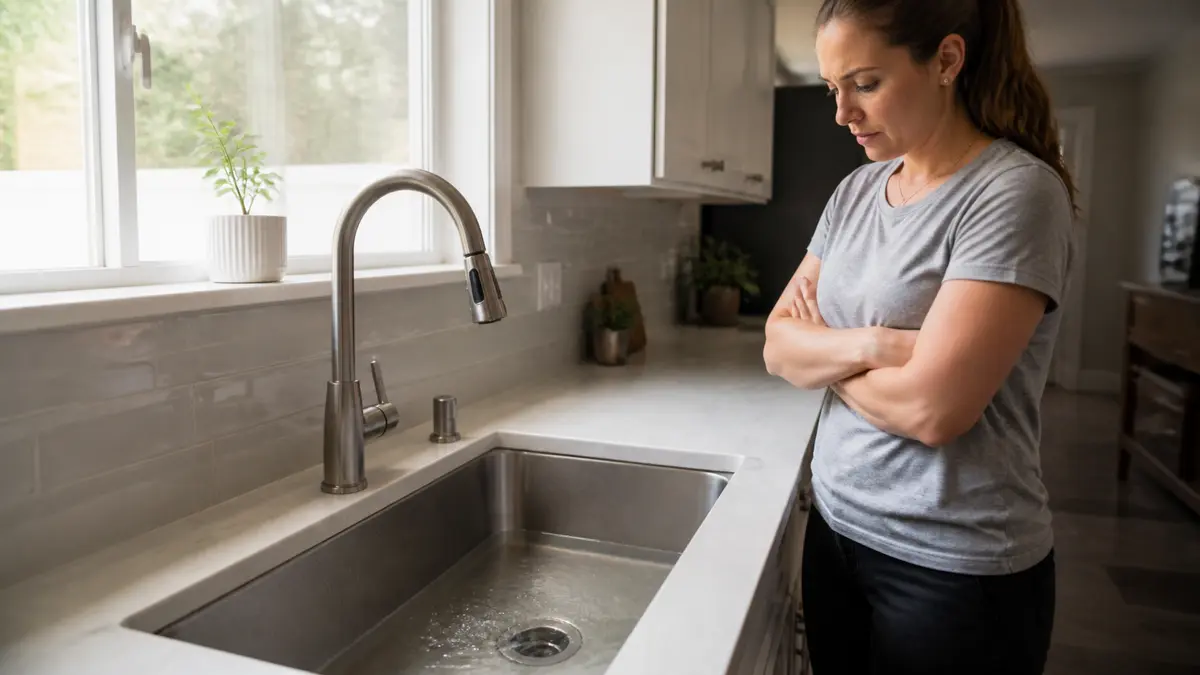
When a kitchen sink keeps clogging, getting the water moving once is not the same as solving the recurring problem. The trigger may involve what enters the drain, a restriction farther along the pipe, or an issue shared with another fixture. Tracking the pattern helps an Ogden plumber choose the right inspection instead of repeating a temporary fix.
Quick answer: Recurring kitchen clogs often need more than surface clearing. Note whether one or both bowls are slow, whether the dishwasher or disposal changes the water level, and what went down the sink before the problem returned. Avoid grease, chemical mixtures, and repeated high-volume testing.
Identify what “keeps clogging” looks like
Recurrence has a timeline. A sink that slows again within hours presents a different pattern from one that works normally for months. Record how long the improvement lasts and what household activity comes before the slowdown.
Useful details include:
- One sink bowl or both
- Standing water or only a slow swirl
- A gurgle when the dishwasher drains
- Water moving from one bowl into the other
- A disposal that changes sound or stops
- Odor that returns with the slowdown
- Another nearby fixture reacting at the same time
Do not fill both bowls to test capacity. If a restriction is present, adding a large volume of water can cause an overflow or push wastewater into another fixture.
Grease can move before it sticks
Warm fats, oils, and grease may look liquid at the sink. As they cool farther down the drain, they can cling to pipe walls and narrow the path. Hot water does not make that material disappear.
Salt Lake City Public Utilities advises households to keep grease out of drains, scrape food into trash or compost, and avoid sending food waste through disposals. That is practical local guidance for Northern Utah kitchens.
Use these habits to reduce new buildup:
- Let cooking grease cool in a suitable container, then place it in the trash.
- Scrape plates and pans before washing.
- Keep coffee grounds, fibrous scraps, and starchy food out of the drain.
- Use a sink strainer to catch loose solids.
- Follow the disposal manufacturer’s operating instructions.
These steps help prevent additional material from entering the line. They do not remove an existing restriction.
Why chemicals may hide the real pattern
A liquid drain product may pass through a small channel without clearing material along the full pipe wall. The sink may appear better, then slow again after normal use. Repeated products can also leave harsh chemicals in standing water.
Never mix drain products with bleach, cleaners, or each other. If you have already used one, keep the package and tell the plumber the product name and time of use. That information protects anyone who opens the drain.
Avoid improvised tools that can become stuck or damage piping. If the sink repeatedly slows, Mike Bachman Plumbing’s drain cleaning service can assess the line and determine whether the restriction is local or farther downstream.
Check the relationship with the disposal and dishwasher
Kitchen plumbing often connects the sink, garbage disposal, and dishwasher within a compact area. A symptom that appears only when one appliance runs is important.
Watch from outside the cabinet while the equipment operates normally. Stop immediately if water leaks from a connection, the disposal hums without turning, or water rises rapidly in the sink.
Do not put a hand into the disposal. Do not disconnect dishwasher hoses or loosen the trap to find the blockage. Water and food waste can spill from those connections, and powered equipment adds electrical risk.
If the disposal itself is the focus, use the company’s garbage disposal repair and installation service. If other rooms are affected, the problem may need a wider drainage assessment.
When a kitchen clog may involve more than the kitchen
A kitchen-only slowdown often starts with the branch serving that room. Several slow fixtures, wastewater in a low drain, or a toilet reacting when the sink empties point to a broader pattern.
Stop using affected fixtures and seek prompt help if:
- Wastewater returns through another drain
- Multiple rooms become slow together
- A floor drain bubbles when the sink empties
- Sewage odor accompanies visible wastewater
- Water reaches cabinets, flooring, or electrical equipment
Mike Bachman Plumbing can inspect whether sewer-line repair is relevant. A recurring kitchen clog alone does not prove a sewer-line problem, so the service decision should follow an inspection.
Frequently asked questions
Before service, clear ordinary items from the front of the sink cabinet only if the area is dry. Leave wet containers, electrical cords, and plumbing connections untouched. A photo of the standing-water level and a list of recent sink use can help the technician reconstruct an intermittent clog after the water has receded.
Why does my sink drain normally right after clearing, then slow again?
A narrow passage may temporarily allow water through while material remains in the line. The method used may also have addressed only the opening near the sink. Recurrence is a reason to locate the restriction directly.
Does a garbage disposal prevent food clogs?
No. A disposal reduces some food into smaller pieces, but those pieces still enter the drainage system. Municipal utilities recommend keeping grease and food scraps out of drains.
Should I pour boiling water down the sink?
Avoid using extreme heat as a drain treatment. Hot water can move grease farther before it cools again, and very hot water may not be appropriate for every piping material or connection.
What should I tell the plumber?
Describe which bowl is affected, how quickly water slows, whether the disposal or dishwasher triggers the change, and anything already put into the drain.
Stop the cycle of temporary clearing
When a kitchen sink keeps clogging, focus on the recurrence pattern instead of another quick test. Keep grease and food scraps out, avoid chemical mixtures, and note how connected fixtures behave.
If the sink slows again, contact Mike Bachman Plumbing in Ogden for a direct evaluation. The team can locate the restriction and recommend the appropriate drain service for the actual piping condition.