
Short answer: Hidden water leak signs: unexplained spike in your water bill, sound of running water when nothing is on, warm spots on the floor (slab leak), musty smell or visible mold, water meter that turns when all fixtures are off. The 10-minute water meter test confirms a leak before you call anyone.
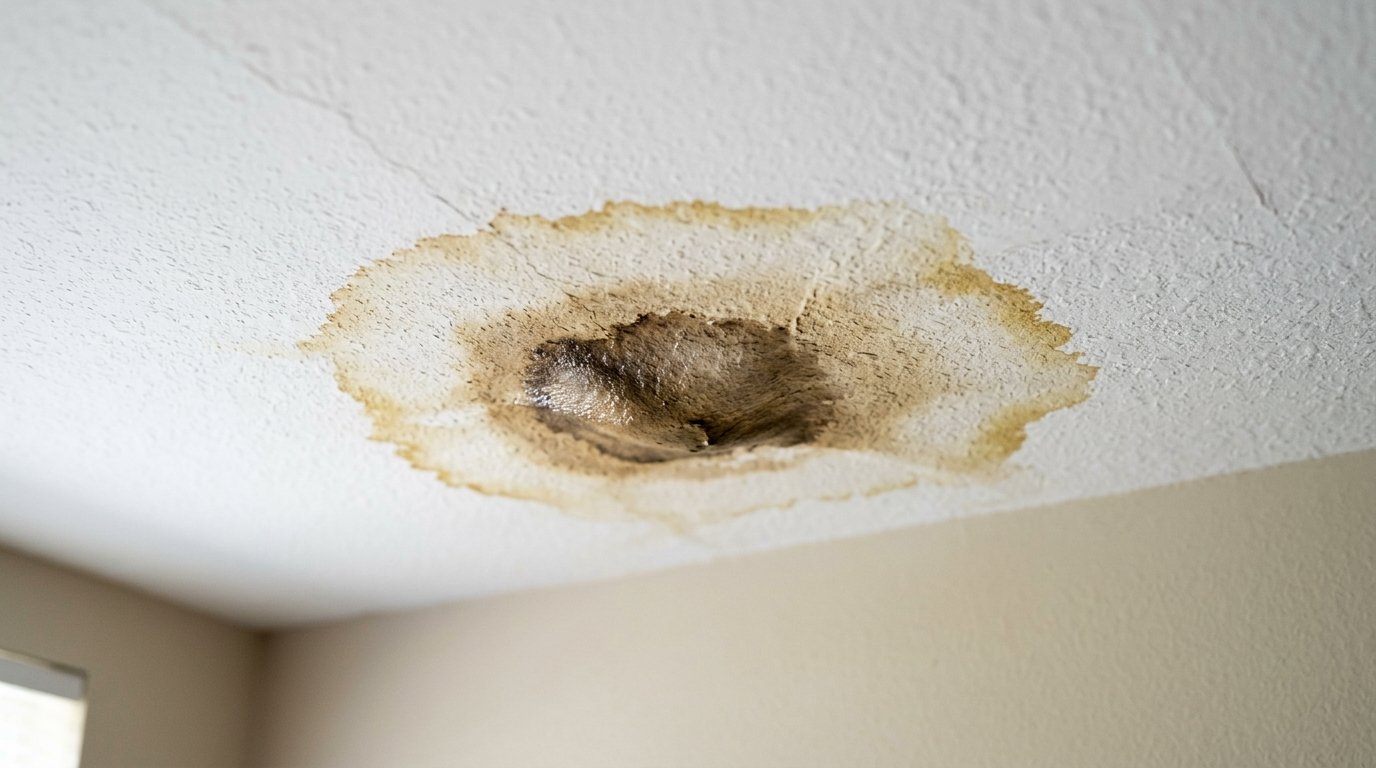
A pinhole leak inside a wall can waste more than 10,000 gallons of water before you ever notice it. In Northern Utah homes — especially the older housing stock in Ogden, Roy, and Layton — hidden water leaks are one of the most common and destructive plumbing problems we deal with. By the time water stains show up on your ceiling or you feel a soft spot in the floor, the leak has often been running for weeks, quietly rotting framing and feeding mold colonies. Knowing the early warning signs can save you thousands in repairs.
Warning Signs You May Have a Hidden Water Leak
The Water Meter Test: Check for a Leak in 10 Minutes
You can run a simple test before calling anyone. Here’s how:
1. Turn off every water fixture in your home — faucets, dishwasher, ice maker, irrigation system, everything.
2. Go to your water meter (typically near the curb or street) and locate the leak indicator — usually a small triangle or dial that spins when water flows.
3. Watch the indicator for 60 seconds without touching anything. If it’s moving, water is flowing somewhere.
4. For a more definitive test: note the exact meter reading, wait 30 minutes without using any water, then read it again. Any increase confirms an active leak.
If the indicator stops when you shut off the main supply valve at the house, the leak is inside your home. If it keeps moving with the house valve closed, the leak is between the meter and your house — a different but equally urgent situation.
This test won’t tell you where the leak is, but it confirms whether one exists. Call us at (801) 627-5953 and we can take it from there.
Why Northern Utah Homes Are Especially Vulnerable
Ogden-area homes face a specific set of conditions that make hidden leaks more likely than in newer construction elsewhere.
**Hard water and copper pipe corrosion.** The Great Salt Lake basin has some of the hardest water in the country. Over decades, mineral-laden water attacks the inside of copper pipes, eventually creating pinhole leaks — tiny perforations that form seemingly out of nowhere. We see this constantly in homes with original copper plumbing from the 1950s–1970s. The exterior of the pipe looks fine; the inside has been slowly eroding for years.
**Older supply line materials.** Many Ogden homes still have galvanized steel supply lines in portions of the system. Galvanized pipe corrodes from the inside out and can fail with no visible exterior warning.
**Freeze-thaw stress.** Even a brief cold snap can stress pipes that run through uninsulated exterior walls or crawl spaces. A pipe doesn’t need to burst dramatically — a hairline crack from a near-freeze event can leak slowly for months.
**Concrete slab foundations.** Neighborhoods built in the post-war era commonly sit on concrete slabs. Pipes embedded in or running beneath concrete are invisible, and the soil movement that comes with Utah’s clay-heavy ground can stress those lines over time.
How We Find Leaks Without Tearing Apart Your Home
The old approach to finding a hidden leak was simple and destructive: cut open walls until you found it. We don’t work that way.
We use a combination of diagnostic approaches to locate leaks with precision before anything is opened up:
**Pressure testing** isolates sections of your plumbing system to identify which zone is losing pressure, narrowing the search area dramatically.
**Sewer camera inspection** lets us see inside drain lines for cracks, joint failures, and intrusions without digging.
**Thermal imaging and acoustic listening equipment** can detect temperature anomalies and the specific acoustic signature of a pressurized leak — even through concrete.
Once we know exactly where the problem is, we make a targeted repair. Instead of opening a 10-foot section of wall, we access a 12-inch area. The result is less mess, faster repair, and significantly lower restoration impacts.
Why Waiting Always Makes It Worse
Hidden leaks don’t fix themselves, and the longer they run, the more damage they do. If you’ve noticed any of the signs above, or if you just want peace of mind on an older home, call Mike Bachman Plumbing at (801) 627-5953. We serve Ogden and all of Northern Utah 24/7 with professional leak detection that finds the problem without destroying your home to do it. A 110-year track record means we’ve seen every kind of leak there is — and we know exactly how to fix them.
About Mike Bachman Plumbing
Mike Bachman Plumbing has served Northern Utah since 1915 — six generations of the Bachman family solving plumbing problems across Weber, Davis, and Cache counties. We are fully licensed and insured in Utah, and every technician we send to your home is background-checked and drug-tested. Our work is backed by a 100% satisfaction guarantee, and we answer emergency calls 24 hours a day, 365 days a year.
Call (801) 627-5953 or visit our shop at 549 W 24th St, Ogden, UT 84401.