
When a garbage disposal hums but won’t drain, switch it off instead of letting the motor continue to strain. The sound can occur when the rotating mechanism cannot move, while standing water may point to a separate or related drain restriction. Because electricity and water meet under the sink, safety comes before troubleshooting.
Quick answer: Turn the disposal off, keep hands and tools out of the opening, and do not run it again just to confirm the hum. Note whether the sink was already slow, whether standing water affects one or both bowls, and whether the unit leaked. A plumber can then assess both the disposal and drain.
A hum and a drainage problem are two observations
The hum describes what the motor does when switched on. The standing water describes the drainage path. They can be connected, but one does not automatically explain the other.
Before touching anything, observe:
- Did the sink drain slowly before the disposal stopped?
- Is water standing in one bowl or both?
- Does the unit hum, click, or remain silent?
- Did a specific item enter the disposal?
- Is water leaking below the sink?
- Did a breaker trip or a reset button release?
Turn the wall switch off after the first symptom. Do not keep cycling power. Continued humming can overheat the motor or trigger its overload protection.
Keep hands out, even when the switch is off
A wall switch in the off position is not the same as verified disconnection from power. Switches can be mislabeled, and some disposals use an air switch or plug below the sink.
Never reach into the disposal with fingers. Do not insert a screwdriver, broom handle, or improvised object. If a loose item is visible, leave removal to someone who can disconnect power and follow the unit’s manufacturer instructions.
InSinkErator’s reset guidance says to place the switch in the off position before using the overload protector. It also explains that the device can trip when a disposal jams or runs too long. Product designs differ, so identify the model before following a specific reset process.
Do not use chemicals in standing water
Chemical drain products can sit above the disposal and create a splash hazard for anyone who later opens the plumbing. They also do not free a jammed rotating mechanism.
Do not add bleach, cleaners, baking mixtures, or another drain product. If a chemical is already in the sink, keep people away and tell the plumber exactly what was used.
Avoid plunging a sink that contains chemicals. Pressure can send the material into another bowl or onto skin and surfaces.
For a direct equipment assessment, Mike Bachman Plumbing provides garbage disposal repair and installation in the Ogden area.
Check for leakage without entering the cabinet
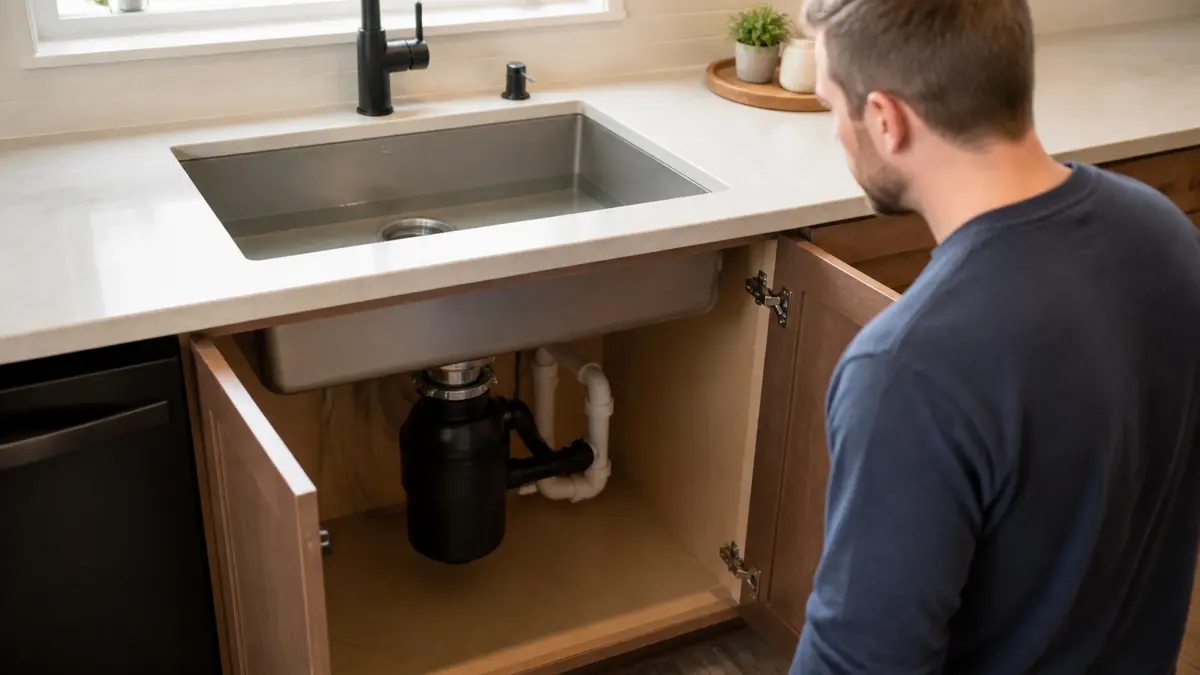
Use a flashlight from outside the cabinet to look for dripping water, a wet cabinet base, or staining below the disposal. Do not crawl under the sink while the unit is connected to power.
If water is leaking near a receptacle, cord, or electrical connection, stay out of the cabinet. Do not unplug equipment while your hands or the surrounding surface are wet. Keep others away and get qualified help.
A dry cabinet does not rule out a drain restriction. Water may remain in the sink because the branch line is blocked beyond the disposal.
When the drain may be the larger issue
If the disposal runs again later but the sink remains slow, the drainage system still needs attention. The same is true when both sink bowls fill, the dishwasher sends water back into the sink, or another fixture gurgles.
Salt Lake City Public Utilities advises residents to keep fats, oils, grease, and food waste out of drains. A disposal breaks some scraps into smaller pieces, but those pieces still enter the pipe.
Mike Bachman Plumbing’s drain cleaning service is the appropriate route when the disposal is no longer the only symptom.
When to call promptly
Stop using the sink and arrange prompt service when:
- The disposal hums every time power is applied
- Water leaks from the disposal body or a connection
- Standing water contains drain chemicals
- A breaker trips repeatedly
- There is a burning smell, smoke, or unusual heat
- The dishwasher or another drain sends water into the sink
- Water is close to a plug, receptacle, or wiring
For smoke, fire, or an electrical emergency, leave the area and contact the appropriate emergency service. Do not treat it as routine disposal troubleshooting.
Frequently asked questions
If you can read the disposal label without entering a wet cabinet, photograph the model information for the service call. Also note whether the unit uses a wall switch, an air button, or a plug under the sink. Do not move cords or test an unfamiliar control to gather those details.
Does humming mean the disposal has power?
The sound suggests the motor is receiving power, but it does not reveal why the mechanism is not turning. Switch it off and avoid repeated attempts.
Should I press the reset button while it hums?
No. Turn the unit off first and follow the exact manufacturer instructions for that model. A reset does not remove every obstruction or correct a drain blockage.
Can I use a disposal wrench?
Some models include a manufacturer tool and a defined procedure. Use it only after power is safely disconnected and the model instructions are confirmed. Otherwise, call for service.
Why is the sink still full after the disposal stops humming?
The branch drain may be restricted, or the disposal outlet may not be passing water. A plumber can inspect both parts of the system.
Protect the sink, disposal, and person doing the work
If a garbage disposal hums but won’t drain, shut it off and preserve the evidence. Keep hands and chemicals out, look for leaks from a safe position, and note how the sink behaved before the failure.
For help in Ogden, contact Mike Bachman Plumbing to inspect the disposal and connected drain. The team can identify whether the problem is mechanical, drainage-related, or both.