
Short answer: To prevent frozen pipes in Ogden, insulate exterior wall pipes and any plumbing in unheated crawl spaces or garages, let faucets drip during sub-10°F cold snaps, keep the thermostat above 55°F when away, and know where your main water shutoff is. Pipes most at risk: exterior walls, crawl spaces, garages, attic runs.
Every winter in Ogden, we get a familiar wave of emergency calls — usually right after the first hard cold snap sends temperatures plunging below 10°F. A frozen pipe that bursts can dump hundreds of gallons of water into your home in a matter of hours, and the water damage often impacts far more than the pipe repair itself. The good news is that most frozen pipe emergencies are preventable if you take a few steps before the temperature drops.
Why Ogden Winters Are Particularly Hard on Pipes
Ogden sits at roughly 4,300 feet elevation, and temperatures regularly fall between 5°F and 15°F during January and February cold snaps. North Ogden, Plain City, and the benchland neighborhoods above the valley floor can see temperatures several degrees colder than downtown. Cache Valley to the north — Logan and the communities around it — experiences some of the coldest sustained temperatures in the state, with nights dropping well below 0°F in hard winters. Older homes in Central Ogden and along the Jefferson Avenue corridor were often built with plumbing that runs through exterior walls, uninsulated crawl spaces, and unheated garages — configurations that made sense in a warmer era but are vulnerable by modern standards. We’ve been responding to frozen pipe calls in these neighborhoods for over a hundred years, and the same spots cause problems season after season.
Which Pipes Are Most Likely to Freeze
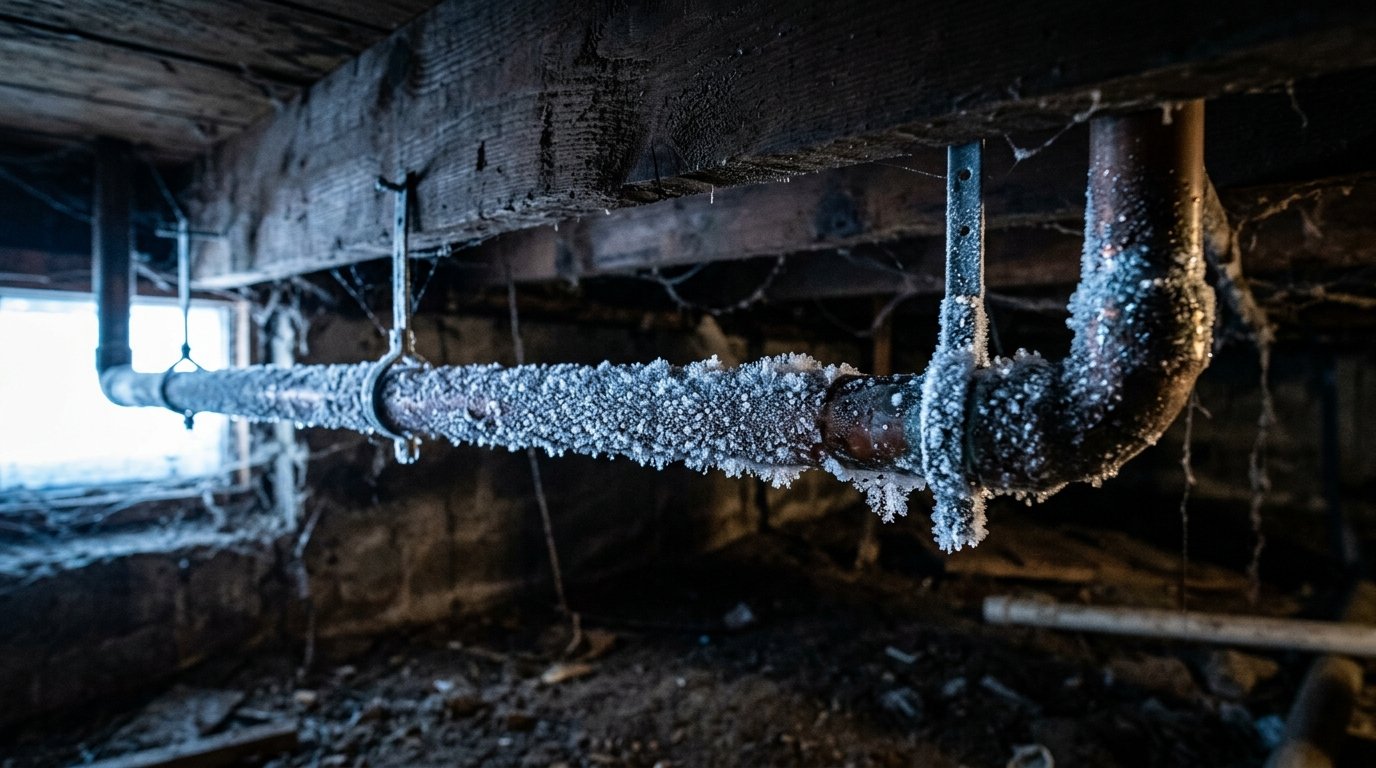
Not all pipes are equally at risk. The pipes most likely to freeze are the ones closest to outside air with the least insulation between them and the cold. Specifically: pipes running through exterior walls, particularly on the north and west faces of your home that get the most wind exposure; pipes in unheated crawl spaces beneath older homes without skirting or insulation; pipes in unheated garages, especially those serving a utility sink or hose bib; and any pipe in a cabinet on an exterior wall — under the kitchen sink on an outside wall is a common one. Supply lines to hose bibs are also at high risk if they haven’t been properly shut off and drained for winter. If you’ve had a pipe freeze in a specific spot before, it will freeze there again unless that section gets properly insulated.
Warning Signs You Already Have a Frozen Pipe
The first sign is usually reduced or zero water flow at a specific fixture when others are working fine. If you turn on the kitchen faucet and get nothing but a trickle — or nothing at all — while the bathroom sink down the hall works normally, you likely have a frozen section in the line serving that fixture. You might also notice frost on an exposed pipe section, or a bulge in a pipe where ice is expanding inside. The danger is that by the time you see these signs, pressure is already building. Ice expands with significant force, and copper and galvanized pipe can only take so much before a joint fails or the pipe wall cracks. The failure often happens when the pipe thaws rather than when it freezes — the crack opens up as pressure restores.
Prevention Steps Before the Temperature Drops
The time to prepare is in October, before the first hard freeze arrives. Here’s what we recommend to every homeowner in Northern Utah: First, insulate exposed pipes in crawl spaces, garages, and against exterior walls using foam pipe insulation — it’s inexpensive and straightforward to install. Second, know where your main water shutoff valve is located. If a pipe bursts, your first move needs to be shutting off the water supply, and hunting for the valve in an emergency wastes critical time. Third, on nights when temperatures are forecast to drop below 20°F, open cabinet doors under sinks on exterior walls to let warm interior air reach those pipes. Fourth, let faucets on vulnerable lines drip slowly — even a trickle keeps water moving and relieves pressure buildup if freezing starts. Fifth, shut off and drain outdoor hose bibs before the first freeze. A single frost-free hose bib does not protect you if the interior shutoff valve isn’t closed and the line drained.
What to Do If a Pipe Freezes
What Happens When Pipes Burst — The Real impact
Northern Utah winters don’t give much warning. When temperatures plunge, your pipes are either ready or they aren’t. Take the prep steps now — insulate, locate your shutoff, and know who to call. If you have a frozen pipe emergency, Mike Bachman Plumbing is available 24/7/365 at (801) 627-5953. We’ve been keeping Ogden homes from flooding since 1915, and we’ll be here when you need us.
Related: 24/7 emergency plumbing.
About Mike Bachman Plumbing
Mike Bachman Plumbing has served Northern Utah since 1915 — six generations of the Bachman family solving plumbing problems across Weber, Davis, and Cache counties. We are fully licensed and insured in Utah, and every technician we send to your home is background-checked and drug-tested. Our work is backed by a 100% satisfaction guarantee, and we answer emergency calls 24 hours a day, 365 days a year.
Call (801) 627-5953 or visit our shop at 549 W 24th St, Ogden, UT 84401.