
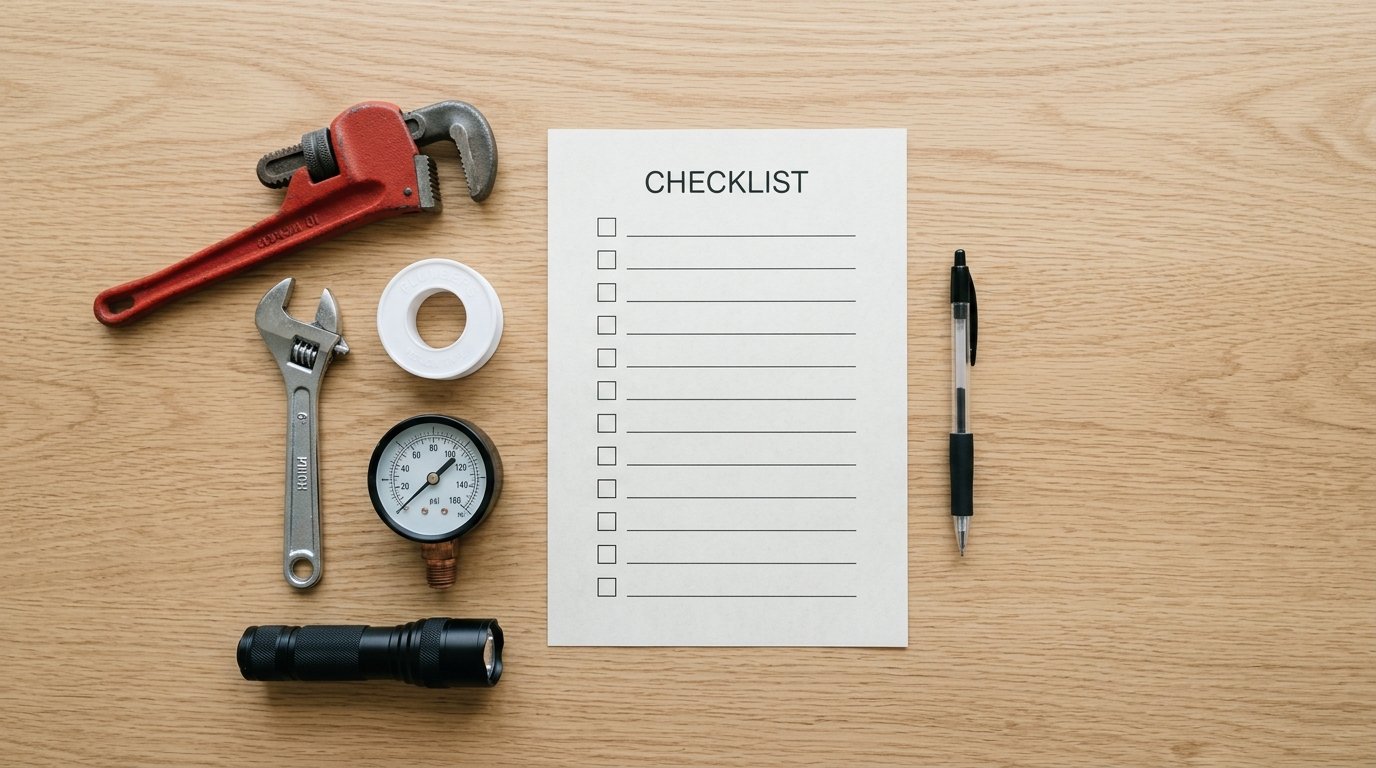
Most plumbing failures aren’t random — they’re the result of something that could have been caught months earlier. In Northern Utah, our hard water, extreme winter temperatures, and aging housing stock create specific vulnerabilities that a generic plumbing checklist from a national home improvement site won’t cover. This one is written for Ogden, Weber County, Cache Valley, and the rest of Northern Utah. Work through it once a year and you’ll catch problems before they become emergencies.
Spring Checklist: Assess Winter Damage Before It Becomes a Problem
Spring is the most important inspection window in Northern Utah. Freeze-thaw cycles stress pipes in ways that don’t always show up as immediate failures — a pipe that cracked in January may start leaking slowly in March.
– **Check all exposed pipes in the basement, crawl space, and garage** for cracks, mineral deposits (white crusty buildup), or signs of moisture. A cracked section that hasn’t fully failed yet is far cheaper to fix now than after it blows.
– **Test the pressure relief valve on your water heater.** Lift the lever briefly and let it snap back — you should hear a burst of water release into the drain pipe. If nothing happens, or if it keeps dripping after you release it, the valve needs to be replaced. This is a safety component, not optional.
– **Inspect washing machine hoses.** Rubber supply hoses should be replaced every 5–7 years. If yours are bulging, cracking, or have mineral staining at the connections, replace them now. A burst washer hose is one of the most common causes of major home water damage.
– **Check sump pump operation** if your home has one. Pour a bucket of water into the pit and confirm the pump activates. Spring snowmelt is when you need it most.
– **Schedule a water heater flush** if you didn’t do one last fall. Northern Utah’s hard water deposits sediment in the tank quickly — annual flushing is more important here than anywhere else in the country.
Summer Checklist: Outdoor Systems and Slow Problems
Summer is lower urgency for plumbing emergencies, but it’s the best time to catch slow problems before you’re heading into the high-demand seasons.
– **Check all outdoor hose bibs and irrigation connections.** Turn each one on and look for drips at the connection point and the spigot itself. A worn washer is a simple repair. An ignored leak that freezes into a cracked pipe in November is a much larger bill.
– **Inspect irrigation system backflow preventer.** Utah law requires backflow prevention on irrigation systems connected to municipal water. These valves can be damaged by winter freeze and may be dripping by spring.
– **Test all indoor drains for slow clearing.** Run water for 30 seconds in each sink, tub, and shower. A drain that takes more than 5 seconds to fully clear is partially blocked. Address it now — with summer guests and heavy use coming, a slow drain becomes a full backup fast.
– **Check under every sink for moisture.** P-trap connections loosen with vibration over time. A small drip under the sink for a few months is enough to cause cabinet floor rot and mold.
– **Inspect toilet tanks for running water.** Put a few drops of food coloring in the tank and don’t flush for 15 minutes. If color appears in the bowl, the flapper is leaking. A running toilet can waste 200 gallons a day — you’ll see it in your water bill.
Fall Checklist: Prepare for Northern Utah Winter
Fall preparation is where you protect your home from the most destructive plumbing events of the year. Northern Utah winters are serious — Cache Valley in particular regularly sees extended periods below zero. Don’t skip this season.
– **Disconnect and drain all garden hoses before the first hard freeze.** A garden hose left connected traps water at the outdoor spigot. When that water freezes, pressure can travel back and crack the pipe inside the wall. This is a very common and entirely preventable failure.
– **Insulate exposed pipes in unheated spaces.** Any pipe in a garage, under a mobile home, in a crawl space, or against an exterior wall without adequate insulation is a freeze risk. Foam pipe insulation is straightforward to install and can help prevent serious freeze damage.
– **Service your water heater before heavy winter use.** Hot water demand goes up significantly in winter. A water heater that’s been running fine all summer may not handle the increased load if it has heavy sediment buildup. Fall is the right time to flush the tank, inspect the anode rod, and confirm it’s operating efficiently.
– **Check water softener salt levels and add salt if needed.** You rely on your water softener more in winter when you’re running more hot water. An empty brine tank means hard water is flowing through your pipes and appliances again.
– **Know where your main shutoff valve is, and make sure everyone in the household knows.** This is a checklist item that requires zero tools — it’s just awareness. When a pipe bursts at midnight in February, the person who finds it first needs to know where to go.
Winter Checklist: Active Protection During Freeze Season
Some of this is ongoing behavior rather than a one-time check. Cold snaps in Northern Utah can arrive fast and stay for weeks.
– **Keep cabinet doors under sinks open on nights below 20°F.** Cabinet doors block warm room air from reaching supply lines on exterior walls. Opening them is the simplest freeze prevention available.
– **Let faucets drip during sub-zero nights,** especially on exterior walls. Running water resists freezing. One dripping faucet on the cold side of the house can prevent a burst pipe.
– **If pressure drops suddenly or you turn on a faucet and get nothing,** suspect a frozen pipe. Turn off the main water supply immediately and call us. Do not try to thaw a pipe with an open flame — this causes house fires. A hair dryer or heating pad on the affected area is acceptable while we’re en route.
– **Check the area around your water meter** (usually in the basement near an exterior wall) during extended cold snaps. This is a common freeze point.
– **If you leave town during winter,** do not turn your thermostat below 55°F. Set it to 60°F at minimum and have someone check the house every 48 hours. More Ogden homes sustain burst pipe damage from owners setting the heat too low during vacations than from any other single cause.
Anytime Checks: Signs That Something Is Wrong Right Now
These aren’t seasonal — they’re warning signs that should prompt immediate action whenever you notice them:
– **Unexplained water bill spike:** Your usage patterns are consistent month to month. If your bill jumps 20% or more without explanation, you have a hidden leak somewhere. Common culprits: running toilet, underground irrigation leak, slow pipe leak inside a wall.
– **Multiple slow drains at once:** One slow drain is a localized clog. Three slow drains at the same time means the problem is in your main sewer line — tree roots, grease buildup, or a partial collapse.
– **Rusty or brown water:** In older Ogden homes with galvanized steel pipes or aging water heaters, discolored water means corrosion. This needs to be investigated, not just flushed out.
– **Water heater making rumbling, popping, or banging sounds:** This is sediment buildup on the heating element. It means your water heater is working harder than it should and its lifespan is shortening. Schedule a flush immediately.
– **Low water pressure throughout the house:** If pressure has dropped at every fixture, not just one, you may have a main line issue, significant scale buildup narrowing your pipes, or a problem with the pressure regulator. All of these need a professional diagnosis.
Plumbing maintenance isn’t dramatic — it’s a list of small things done consistently. In Northern Utah, where hard water and cold winters accelerate wear faster than most of the country, that consistency matters more than it does elsewhere. Mike Bachman Plumbing has been helping Ogden and Northern Utah homeowners stay ahead of plumbing problems since 1915. If you’d like a professional inspection to work through this checklist with you, call us at (801) 627-5953. We’d rather help you prevent a problem than fix one.