


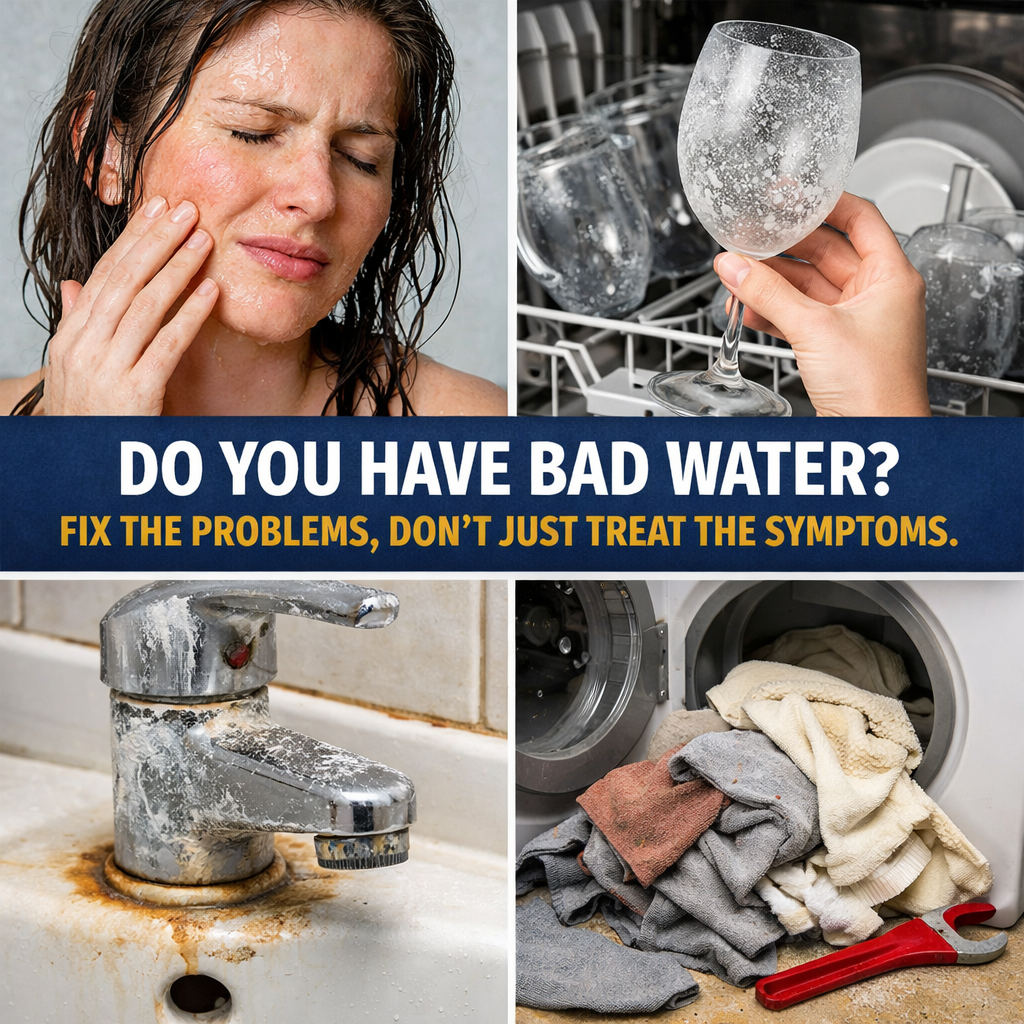
10 Reasons You Should Improve Your Home’s Water Quality
Do you buy bottled water because your tap water tastes or smells bad? Does your skin feel dry and itchy after showering? Are your water-using appliances wearing out faster than they should?
These are all signs that your water quality may not be what it should be.
Even though city water is treated to be safe, it can still contain chlorine, chloramines, minerals, and other elements that negatively affect your home, your health, and your wallet. Here are 10 clear reasons why improving your water quality is a smart investment.
1. Dry, Itchy, or Irritated Skin
Wouldn’t it be nice to step out of the shower with soft, smooth skin?
Chlorine in municipal water strips away natural oils, while hard water minerals leave behind a residue that’s difficult to rinse off. This combination often leads to dry, itchy, and irritated skin.
By improving your water quality, you can enjoy softer water that’s gentler on your skin—without relying on lotions and creams to fix the problem afterward.
2. Damaged, Dry, or Brittle Hair
If your hair feels dull, tangled, or prone to split ends, your water may be the culprit.
Chlorine damages hair fibers, while hard water minerals react with soap to form a sticky film that coats your scalp and hair. This buildup makes hair difficult to rinse clean and can leave it lifeless and brittle.
Soft, chlorine-free water helps your hair feel cleaner, healthier, and easier to manage—without expensive products.
3. Bad-Tasting Tap Water
Chlorine and chloramine are added to city water to disinfect it, but once that water reaches your home, those chemicals can make it taste unpleasant.
Many homeowners turn to bottled water as a solution, but that gets expensive and creates unnecessary waste. Improving your water quality allows you to enjoy fresh, clean-tasting water straight from the tap.
4. Unpleasant Water Odors
From strong chlorine smells to sulfur or “rotten egg” odors, smelly water makes everyday tasks unpleasant.
If your water smells bad, you may avoid drinking it, cooking with it, or even bathing comfortably. Treating your water at the source allows you to enjoy odor-free water throughout your home—no bottled water required.
5. Shortened Appliance Lifespan
Water heaters, dishwashers, washing machines, and other appliances rely on clean water to operate efficiently.
Hard water minerals cause scale buildup inside appliances, reducing efficiency and shortening their lifespan. Chlorine can also dry out rubber seals and internal components, leading to premature failure and costly repairs.
Better water quality helps protect your appliances and saves you money long-term.
6. Mineral Buildup on Faucets and Fixtures
White, crusty scale or rust stains on faucets are more than just an eyesore.
Hard water minerals build up on fixtures and inside your plumbing system, restricting water flow and increasing the risk of corrosion. Treating your water helps keep fixtures cleaner and extends the life of your pipes.
7. Spotty Dishes and Glassware
Hard water leaves mineral spots behind when water evaporates, resulting in cloudy glasses and spotted dishes.
If you’re tired of hand-drying everything just to avoid spots, improving your water quality can eliminate mineral residue and leave your dishes sparkling clean straight from the dishwasher.
8. Constant Soap Scum in Bathrooms
Hard water doesn’t mix well with soap.
Calcium and magnesium react with soap to form a sticky film that clings to tubs, showers, sinks, and tile. Over time, soap scum becomes harder to remove and requires more cleaning products and effort.
Softened water reduces buildup and makes cleaning faster and easier.
9. Faded, Scratchy, or Stained Clothing
Chlorine weakens fabric fibers, causing clothes to fade and wear out faster. Hard water minerals can leave soap residue behind, making clothing feel stiff or scratchy and turning whites yellow over time.
If your water contains iron, you may also notice rust-colored stains on laundry. Treating your water helps protect your clothes and keeps them looking newer longer.
10. Stains Around Fixtures and Appliances
Red, orange, black, or blue-green stains around sinks, toilets, or appliances are signs of minerals like iron, manganese, or low-pH water.
These stains can be difficult—and expensive—to remove, often requiring fixture replacement. Improving your water quality helps prevent staining before it starts.
Solve Your Water Problems—Don’t Just Live With Them
High-quality water saves you time, money, and frustration. You’ll:
- Spend less time cleaning
- Use less soap and cleaning products
- Extend the life of appliances and plumbing
- Stop buying and hauling bottled water
- Enjoy better-tasting food and drinks
- Entertain with confidence
When considering water treatment solutions, remember that not all systems are created equal. The right solution depends on your specific water issues.
Schedule a Free Water Consultation
Contact Mike Bachman Plumbing for a FREE water consultation—with no hassle, no hype, and no sales pressure. We’ll help you find the right solution for your home and your water.