
Keeping your drains flowing properly is essential for maintaining a healthy plumbing system. Over time, buildup, debris, and blockages can cause slow drainage or complete backups. Fortunately, a variety of drain cleaning methods are available—each designed for specific types of clogged drains and plumbing issues.
Below is a breakdown of the most common drain cleaning techniques and when they should be used.
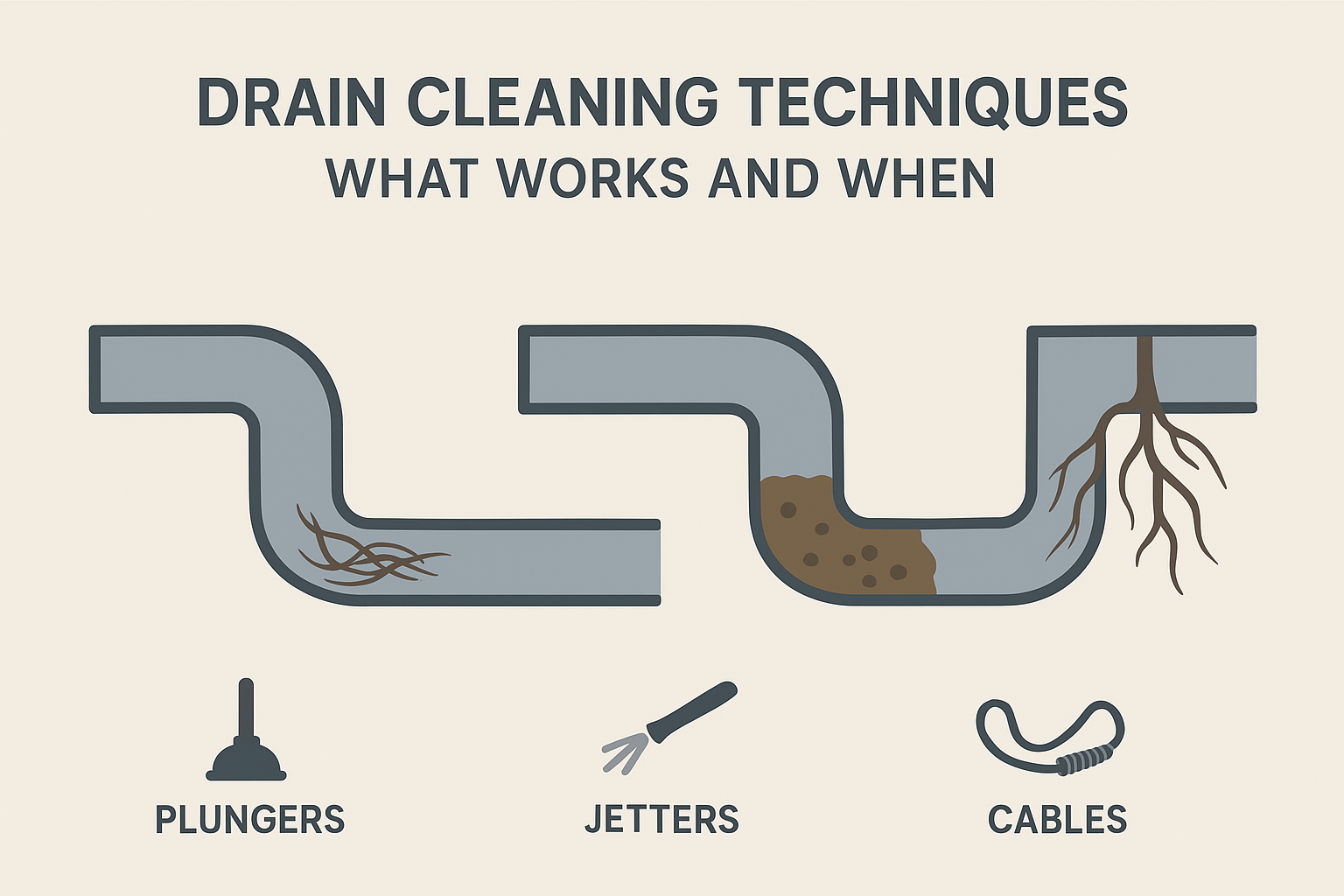
Common Drain Cleaning Tools & Methods
- Plungers
- Chemical Drain Cleaners
- Cable Machines (Drain Snakes)
- Hydro Jetters (High-Pressure Water Jetting)
- Flex-Shaft Chain Snakes
1. Plungers: Best for Simple, Localized Clogs
Plungers are the first line of defense for simple sink clogs, toilet clogs, and P-trap blockages. When a clog is close to the drain opening—such as hair in a P-trap or paper in a toilet—a plunger can often solve the issue quickly.
By driving the plunger up and down over the drain, you create pressure and suction that break apart the obstruction. This is one of the most effective methods for minor drain blockage removal.
2. Chemical Cleaners: Use With Caution
Chemical drain cleaners are widely available, but they must be used carefully. These products can damage plumbing systems and pose a risk to your health through fumes or skin contact.
Chemical cleaners work best on minor sink and shower clogs close to the drain opening. They are far less effective for deep drain blockages, as the chemical dilutes before reaching the obstruction. Leaving harsh chemicals in a fixture too long can also discolor or damage finishes.
For most homeowners, chemical cleaners should only be a last resort before calling a professional plumber.
3. Cable Machines (Drain Snakes): For Deeper Blockages
When a clog is located farther down the line and plunging isn’t enough, cable machines—commonly called drain snakes—are the next step.
Different cable sizes are used depending on the drain:
- Small cables for 1¼”–2″ sink, tub, and shower lines
- Large sewer cables for toilets and main sewer line cleaning
Cable machines are designed to cut through roots, debris, and solid obstructions, making them one of the most common tools in professional drain cleaning services.
4. Jetters: High-Pressure Water Cleaning for Severe Buildup
Hydro jetters use high-pressure water to remove grease, sludge, soap buildup, and heavy debris from drain and sewer lines. As pipes age, residue accumulates on the interior walls and restricts flow.
A jetter scours the inside of the pipe, flushing away buildup and restoring proper drainage. This makes hydro jetting ideal for:
- Grease-packed kitchen drains
- Restaurants and commercial properties
- Long sewer lines with years of buildup
- Sewer pipes affected by sludge and scale
5. Flex-Shaft Chain Snakes: Advanced Cleaning for Hard Deposits
Flex-shaft machines are designed to remove tougher materials like rust, scale, mineral buildup, and invasive tree roots from inside drain pipes. They are often used as preparation before pipe lining or trenchless sewer repair, ensuring the interior surface is clean and smooth.
Flex-shaft cleaning uses a rotating chain tipped with grinding edges to scrape and polish the inside of the pipe. This technique is especially effective for cast iron pipes and older sewer systems.
Important Safety and Professional Considerations
Well-designed and properly installed sewer lines can generally withstand professional drain cleaning equipment. However, older or improperly installed pipes may be more vulnerable during the cleaning process.
Because drain cleaning tools and chemicals can be hazardous if used incorrectly, homeowners should exercise caution. For anything beyond basic plunging, it’s best to call trained professionals who have the right equipment—and the expertise—to perform safe and effective drain cleaning services.